Power Transmission Lines – Part 1 and Part 2
23 November, 2018
Today, the most practical and economical form of energy is undoubtedly electrical energy. Beginning in the late 19th century, electricity was first used for lighting purposes, and in the following years, demand grew to enormous levels. This necessity made the transmission of energy indispensable, leading to the establishment of power transmission lines.
In recent decades, rapid population growth and technological advancements—such as electric transportation, increased computer usage, and developments in automation systems—have required that the generated electrical energy meet ever-increasing capacity demands. Particularly after World War II, global electricity consumption has risen by approximately 10% annually.
To meet this growing demand, new generation facilities have been constructed and transmission networks expanded. As a result, electrical energy systems have evolved, and the disciplines of energy generation, energy transmission, and energy distribution have each developed into distinct branches of engineering.
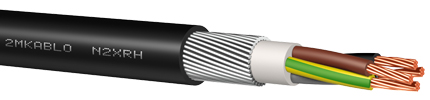
Electricity generation facilities—such as hydroelectric plants, thermal power stations, natural gas cycle plants, and wind farms—are generally not established near consumption centers. The main reasons include challenges in raw material transportation, environmental concerns, and safety requirements.
For example, in our country, hydraulic and thermal resources are predominantly located in the Eastern and Southeastern Anatolia regions. In contrast, the highest electricity demand is concentrated in the western regions, far from the production centers.
As a result, the generated electricity must be transmitted over long distances, often spanning hundreds of kilometers. This necessity highlights the critical importance of power transmission lines, which ensure that energy produced at generation sites can be delivered reliably and efficiently to consumption centers.
What is a Power Transmission Line?
A power transmission line is the infrastructure that enables the transfer of electrical energy—generated in power plants under controlled and planned conditions—from generation facilities to distribution networks. It connects electricity generation plants to transformer stations located near consumption centers, and from these stations to end-users.
In the construction of transmission lines, several factors must be carefully evaluated, including cost, route planning, geographical and land conditions, and safety considerations. Ensuring the secure installation of transmission lines and minimizing energy losses during transmission are of critical importance for the reliability and efficiency of the electrical power system.
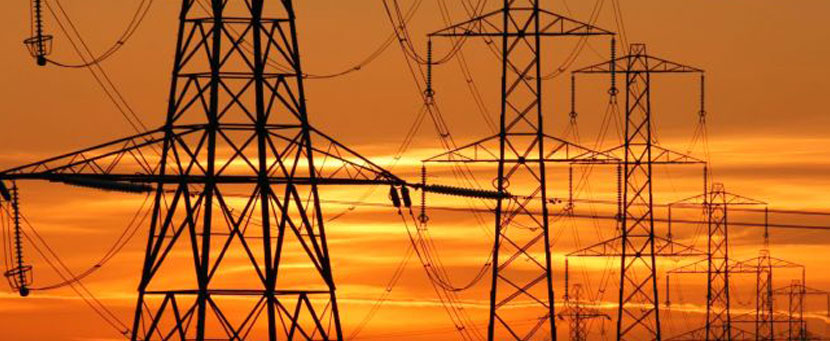
Power transmission lines are divided into high-voltage and low-voltage categories:
- High-voltage lines are typically installed between power plants and residential or industrial settlements.
- Low-voltage lines are used for electricity distribution within urban areas.
They are named according to the voltage level of the energy they carry and are dimensioned based on both the load and voltage requirements.
In modern practice:
- Overhead transmission lines are preferred in open terrain for long-distance energy transfer.
- Underground transmission lines are installed in populated areas. Although underground lines require higher insulation and are significantly more expensive compared to overhead lines, they are favored for safety and aesthetic reasons.
An overhead transmission line (ENH) consists of a conductor cable made of copper or aluminum, a supporting tower (pylon), and insulators that provide the connection between the conductor and the pylon.
From a more technical perspective:
- Lines between power generation plants and major transformer stations are classified as high-voltage lines.
- Lines between large transformer stations and smaller transformer stations are classified as medium-voltage lines.
- Lines between small transformer stations and end-users are classified as low-voltage lines.
In Turkey, transmission lines are generally constructed in accordance with established standards. They are designed to transport generated electrical energy over long distances and consist of various material groups such as towers of different constructions, conductors, grounding equipment, hardware assemblies, and insulators.
From an electrical standpoint, transmission lines are characterized by their line parameters and lengths. The national transmission system is established and operated by TEİAŞ (Turkish Electricity Transmission Corporation).
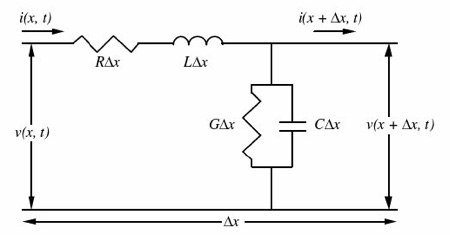
Equivalent Circuit Model of Power Transmission Lines
As with all conductors operating under sinusoidal alternating current, overhead power transmission lines also possess ohmic resistance, inductance, and capacitance coefficients—collectively referred to as the R-L-C line constants.
The ohmic resistance of transmission lines is greater than their direct current resistance due to the skin effect. In addition, the magnetic fields generated by currents flowing through adjacent conductors produce both self-inductance and mutual inductance in the phase conductors.
Since the system operates with sinusoidal alternating current, the term inductive reactance—a function of network frequency—is used instead of inductance. The line’s ohmic resistance and inductive reactance are considered to be connected in series, and the characterization of the line is represented by the impedance, which is the series sum of these two quantities.
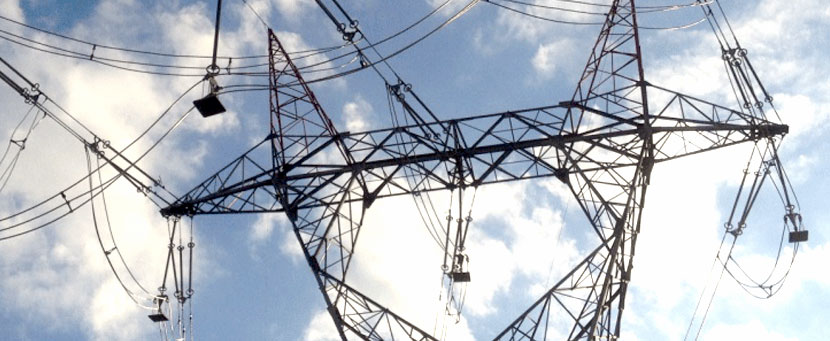
Today, transmission line constants can be calculated in full detail using computer-based tools and monitored in virtual environments. One of the most critical factors to be addressed during the design stage is the length of the transmission line, as it directly influences several key operating parameters.
► Voltage Level:
- In the early years, when power transmission was limited to kilowatt levels, voltage levels were only in the range of volts.
- With the transmission of gigawatt-scale power in later years, much higher voltage levels became necessary.
- In Turkey, transmission voltages are currently in the range of 154–380 kV.
- With advancements in insulation technology, voltages up to 1 MV are being considered worldwide.
- At constant power, higher voltage reduces phase current compared to lower voltage, thereby minimizing line losses, voltage drops, and other inefficiencies. For this reason, voltage levels are increased as much as possible in long transmission lines.
► Number and Type of Conductors:
- Increasing transmission distance requires the transfer of very large amounts of power.
- To transmit more power, double-circuit transmission lines are employed.
- Conductors are typically used in stranded steel/aluminum (St/Al) form and in bundled configurations.
- Research is also ongoing into six-phase transmission systems to further enhance capacity.
►Type of Current
Traditional power transmission lines operate with sinusoidal alternating voltage (AC). However, for the past 30–35 years, direct current (DC) transmission has also been considered. Economic studies have shown that DC transmission is generally more expensive than conventional AC transmission, but as transmission distances increase, this cost difference diminishes.
Today’s power transmission systems are fully interconnected, making it impossible to consider them separately. In general, transmission lines are categorized into short, medium, and long transmission lines, and their design is carried out accordingly.
Use of High Voltage in Power Transmission
The use of high voltage in power transmission is a necessity. By employing high voltage, transmission losses are reduced, conductor cross-sections can be minimized, and insulators and towers can be constructed more economically.
In Turkey, the development of high-voltage applications has increased in parallel with the expansion of transmission and distribution networks. The maximum voltage level in the Turkish energy grid is 400 kV. As transmission distances increase, losses also rise, creating challenges in energy delivery. These challenges have been addressed by raising voltage levels.
Globally, transmission voltages are being increased to reduce losses, and many newly constructed switchyards, transmission lines, and distribution networks are designed accordingly. While high-voltage DC transmission (HVDC) is not currently applied in Turkey, several countries worldwide are experimenting with and utilizing this system.
Advancements in high- and medium-voltage technologies have also led to improvements in the materials used in these lines, resulting in more economical and durable structures. Companies planning switchyards and transmission lines must consider material durability, customer requirements, project suitability, and cost-effectiveness. The goal is to achieve designs that are low-cost, long-lasting, and adapted to the installation environment.
Because generation facilities are often located far from consumption centers, energy must be transmitted through long-distance transmission lines. These lines are generally classified into short, medium, and long transmission lines, and their length significantly affects calculations, material selection, line positioning, and installation methods.
Finally, interconnected systems—where multiple lines are linked and supply each other—play a crucial role. Turkey maintains such interconnections both domestically between provinces and internationally with some neighboring countries.
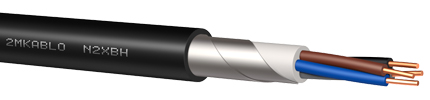
Power Transmission Cables
High voltage is defined as values above 34.5 kV. However, it cannot be increased infinitely without limitation. When voltage levels exceed certain thresholds, significant challenges arise in terms of safety of life and property, as well as risks of discharges and insulation failures. Moreover, the generation and transmission of excessively high voltage values present additional technical and operational difficulties.